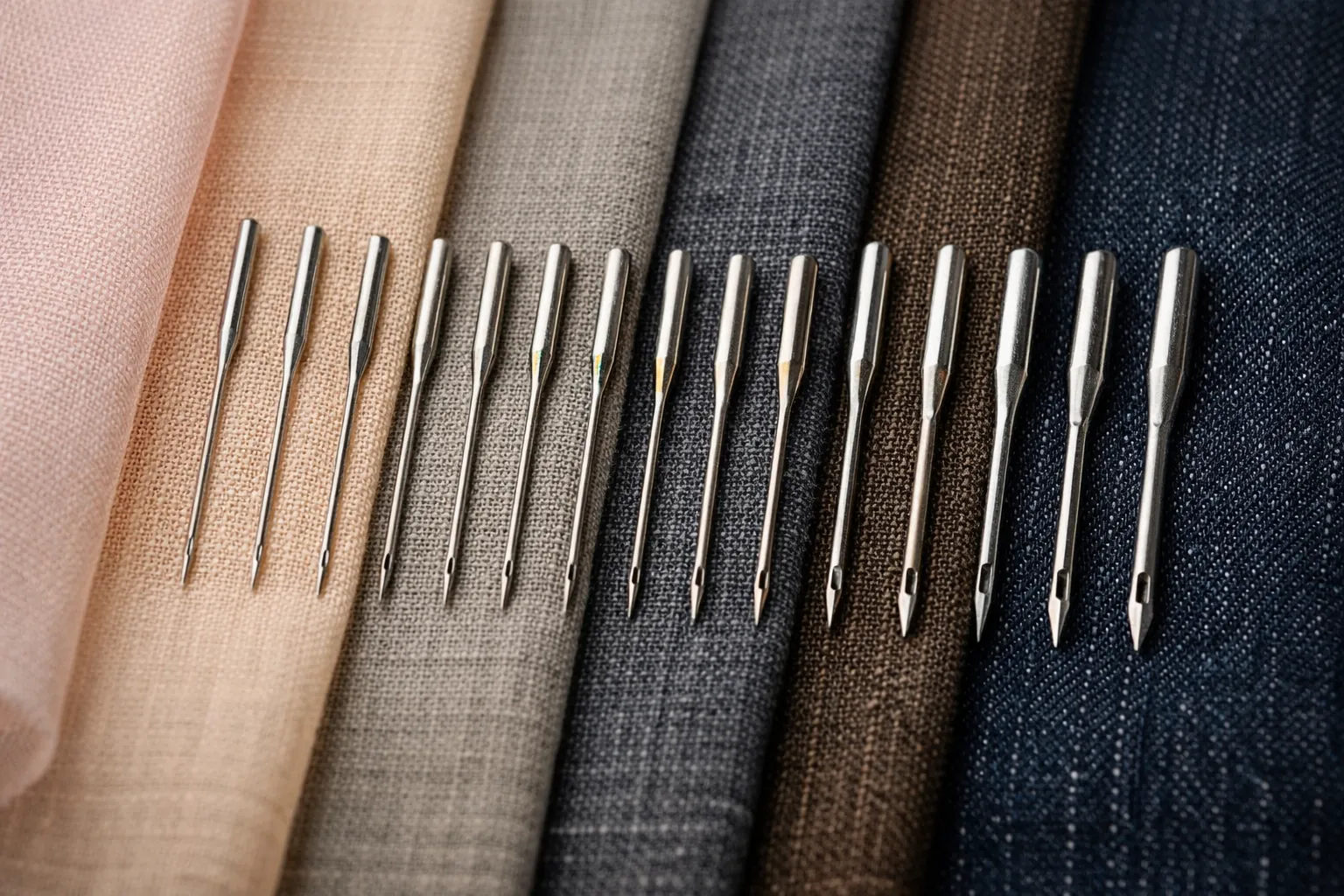
Match the needle to the fabric: a smaller number for finer fabric, a bigger number for heavier fabric, and the right point for the weave. For everyday cotton, an 80/12 universal needle is the answer. Knits want a ballpoint. Denim wants a jeans needle (100/16 or 110/18), and fine wovens or precise topstitching want a Microtex.
How to read a needle size
Needle packs show two numbers, like 80/12. They're the same size written in two systems. The 80 is the European (metric) size, the blade diameter in hundredths of a millimeter, so an 80 is 0.80 mm thick. The 12 is the older US size for the same needle.
Most home machines take needles in the 130/705 H system (also written HAx1). The shank has a flat side, so the needle only fits one way. If you're not sure your machine uses it, the manual will say.
European and US size conversion
| European | US | Blade diameter | Weight class |
|---|---|---|---|
| 60 | 8 | 0.60 mm | Very fine |
| 65 | 9 | 0.65 mm | Very fine |
| 70 | 10 | 0.70 mm | Fine |
| 75 | 11 | 0.75 mm | Fine to light |
| 80 | 12 | 0.80 mm | Medium (everyday) |
| 90 | 14 | 0.90 mm | Medium-heavy |
| 100 | 16 | 1.00 mm | Heavy |
| 110 | 18 | 1.10 mm | Very heavy |
| 120 | 19 | 1.20 mm | Extra heavy |
The short version: 80/12 for everyday, go down for fine, go up for thick.
Needle chart by fabric
| Fabric | Needle type | Size |
|---|---|---|
| Chiffon, organza, silk, lawn | Microtex (sharp) or universal | 60/8 to 70/10 |
| Quilting cotton, shirting, poplin | Universal or Microtex | 80/12 |
| Quilt piecing and machine quilting | Quilting or Microtex | 75/11 to 90/14 |
| Linen, medium wovens | Universal | 80/12 to 90/14 |
| T-shirt jersey, interlock | Ballpoint (jersey) | 70/10 to 80/12 |
| Swimwear, spandex, activewear | Stretch | 75/11 to 90/14 |
| Fleece, sweatshirt knit | Ballpoint or stretch | 80/12 to 90/14 |
| Denim, canvas, duck | Jeans / denim | 90/14 to 110/18 |
| Upholstery, heavy canvas | Jeans / heavy duty | 100/16 to 110/18 |
| Leather, vinyl (garment weight) | Leather | 90/14 to 100/16 |
| Machine embroidery | Embroidery | 75/11 to 90/14 |
| Topstitching with heavy thread | Topstitch (large eye) | 90/14 to 100/16 |
These are general starting points used by needle makers and sewing teachers. Test on a scrap of your fabric and adjust.
Needle types and what the point does
| Type | Point | Use for | Schmetz color band |
|---|---|---|---|
| Universal | Slightly rounded | Most wovens and some stable knits | None |
| Microtex (sharp) | Very sharp, slim | Fine wovens, microfiber, precise piecing and topstitching | Purple |
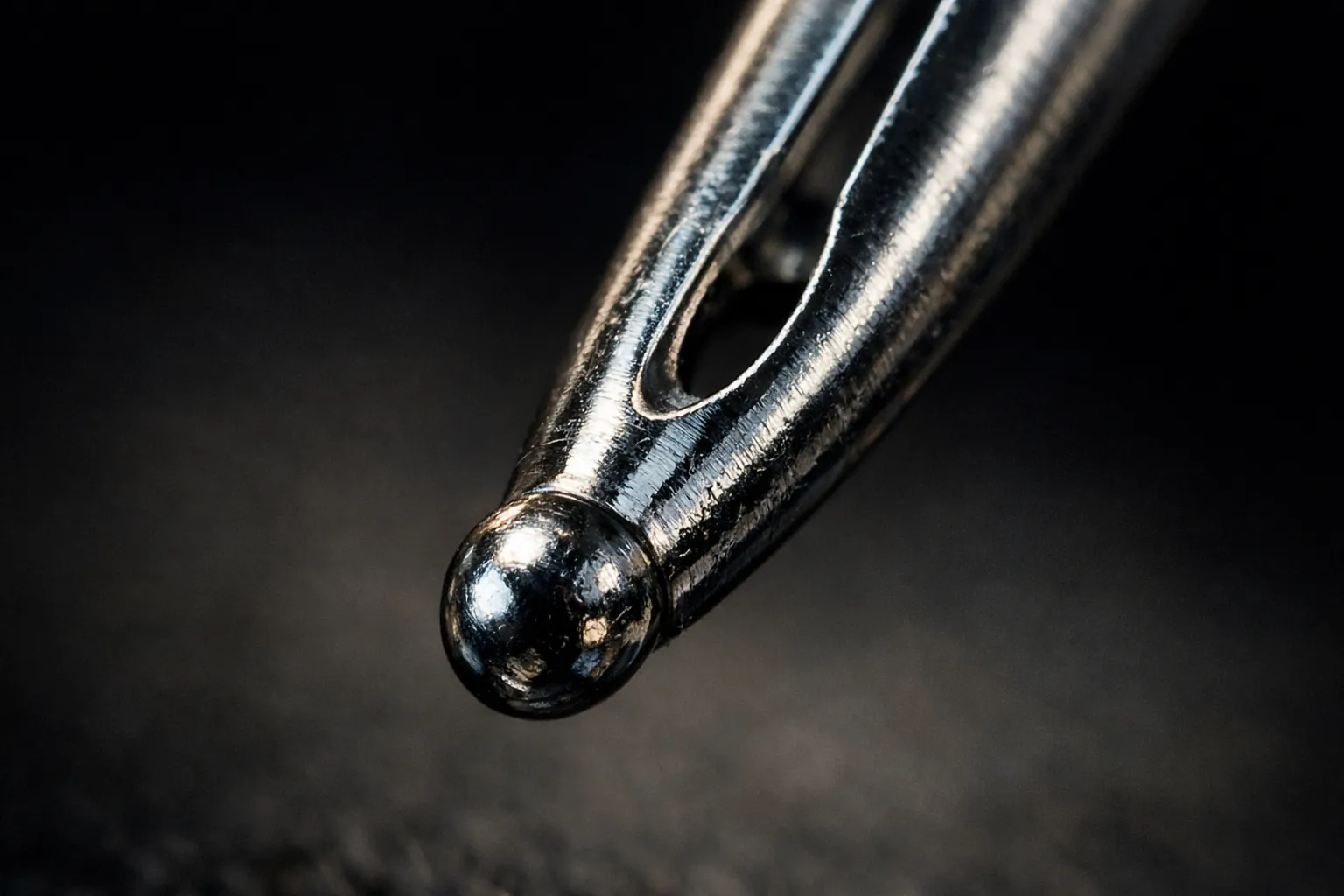
| Ballpoint / jersey | Rounded | Knits; pushes between loops | Orange |
| Stretch | Medium ball, special eye and scarf | Very stretchy knits, swimwear | Yellow |
| Jeans / denim | Sharp, reinforced blade | Denim, canvas, dense wovens | Blue |
| Quilting | Tapered | Multiple layers, piecing | Green |
| Embroidery | Light ball, larger eye | Machine embroidery with rayon or polyester thread | Red |
| Leather | Cutting point | Leather and suede (not synthetic leather-look knits) | Brown |
| Topstitch | Sharp, extra-large eye | Heavy or doubled topstitching thread | Light green |
Schmetz uses a colored band on the needle shank to mark the type and a second band for size; the type colors above are Schmetz's widely published scheme. Other brands use their own codes, such as Janome's blue and purple tip needles.
Matching needle size to thread
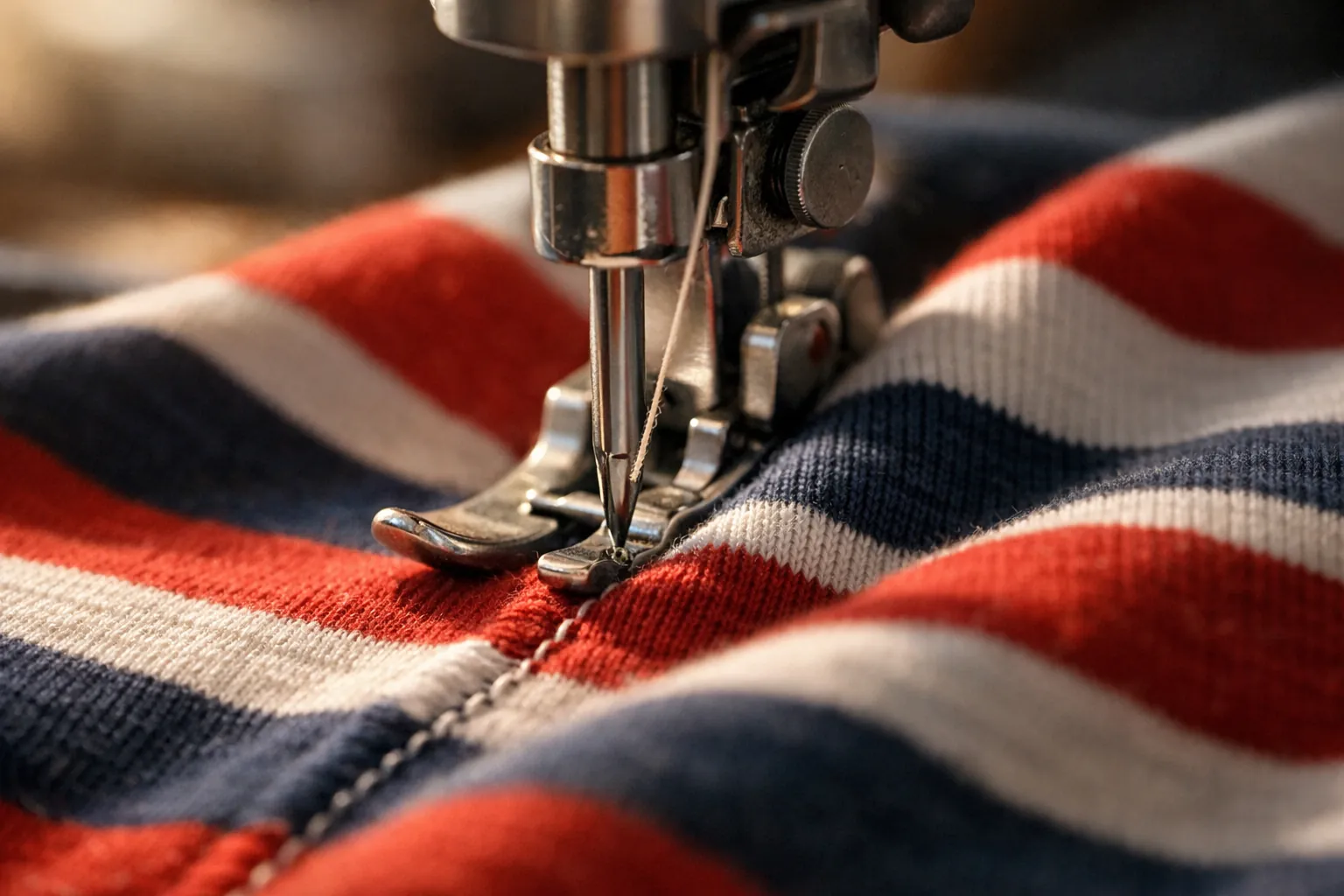
Thread should sit in the needle's long groove and pass through the eye without fraying. Standard all-purpose polyester or cotton thread pairs with 70/10 to 90/14. Fine thread (60 to 100 weight) goes with 60/8 to 75/11. Heavy topstitching thread needs a 100/16 or a topstitch needle. When thread shreds or breaks, the first thing to try is a larger needle, or one with a bigger eye.
Twin and specialty needles
A twin needle is two needles on one shank. It sews two parallel rows at once, with a single bobbin thread zigzagging between them underneath. On a regular sewing machine that gives you a hem that looks like a T-shirt's coverstitch and has some stretch, which is why people reach for it on knit hems.
The label gives the spacing and then the size: 4.0/80 means 4 mm apart, size 80. Your machine needs two spool pins and a zigzag-capable needle plate, and the stitch width should stay at zero unless the manual says otherwise. Some beginner machines include one; the Brother XM2701's listing has a twin needle in the box.
Metallic needles have a large polished eye for metallic threads, and wing needles have flared sides that leave decorative holes in heirloom sewing. You'll know when you need them.
When to change your needle
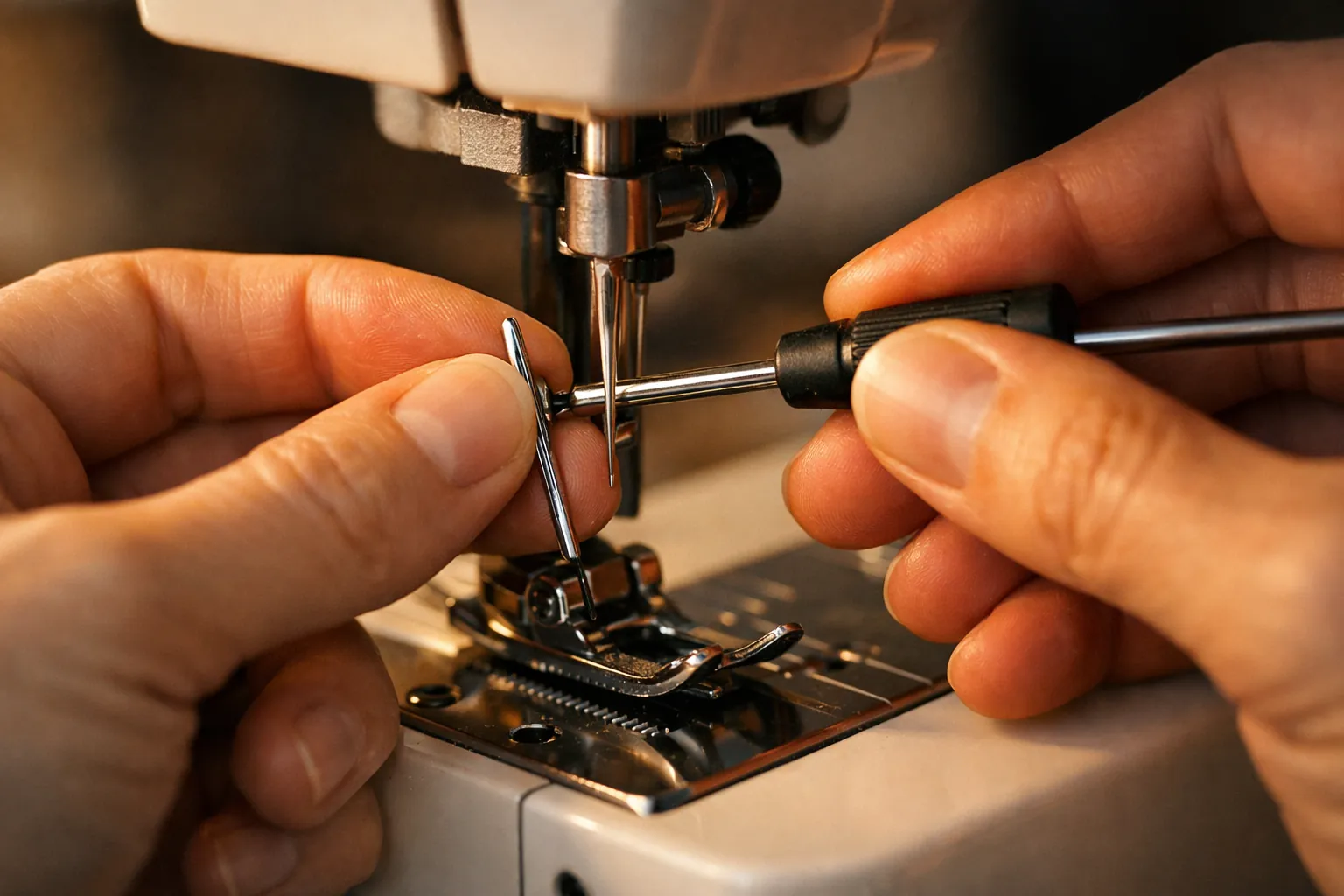
Put a fresh needle in at the start of each project, or after roughly 8 hours of sewing. Change it sooner if any of these happen:
- you hear a thump or popping as the needle enters the fabric
- you see skipped stitches, pulled threads or snags
- you hit a pin, even if the needle looks fine
- you switch to a very different fabric
Needle packs worth keeping on hand
All of these were among the best-selling needle packs in our Amazon search on October 3, 2026.
- Schmetz universal assortment (10-needle cards, 2 pack) gives you a range of sizes for everyday sewing. Schmetz single-size cards are available too, such as 80/12 and 90/14.
- Singer heavy duty needles (90/14, 100/16, 110/18) for denim and leather. This was the best seller in our search, at 4,000+ bought in the past month.
- Schmetz jeans and denim, 110/18 for heavy denim and canvas.
- Ballpoint jersey needles (70/10 to 90/14) or Singer titanium ballpoint (80/11 to 100/16) for knits.
- Schmetz Microtex sharp, 90/14 for crisp topstitching and fine wovens.
- Schmetz embroidery needles, 75/11 for machine embroidery.
- For sergers: Schmetz HAx1SP super stretch serger needles, or ELx705 serger needles if your serger's manual calls for them.
Needle problems, fast fixes
| Problem | Likely needle fix |
|---|---|
| Skipped stitches on knits | Switch to ballpoint or stretch |
| Holes or runs in knit fabric | Ballpoint, and a smaller size |
| Thread shredding or breaking | Larger size, or topstitch/embroidery needle with a bigger eye |
| Needle breaking on denim seams | Jeans needle, 100/16 or 110/18; slow down over bulk |
| Puckered fine fabric | Smaller Microtex needle, 60/8 to 70/10 |
| Thumping noise | Replace the needle; it's likely dull or bent |
Buying a machine for heavy fabrics? See the best heavy duty sewing machines. For garment sewing, read the best sewing machine for making clothes.
Product details come from Amazon listings checked October 3, 2026. Prices change often, so links show the current price on Amazon. How we research · Affiliate disclosure