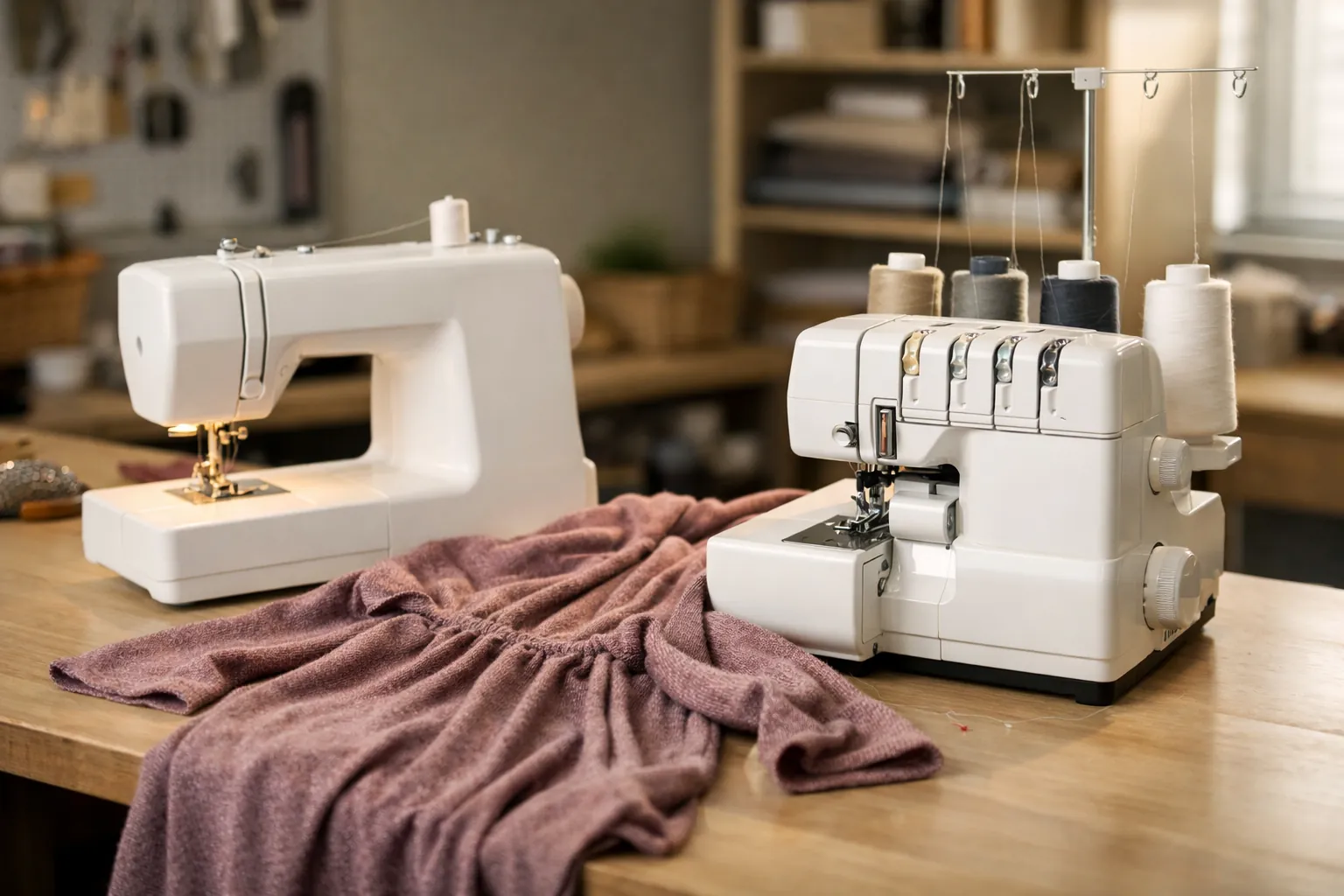
A sewing machine builds things; a serger finishes them. Your sewing machine sews seams anywhere on the fabric, plus buttonholes, zippers and topstitching. A serger stitches over the raw edge with three or four threads while a knife trims it, giving you a stretchy, fray-proof seam in one pass. You need a sewing machine first. A serger is the second machine worth adding if you sew clothes, especially knits.
The stitch is the difference
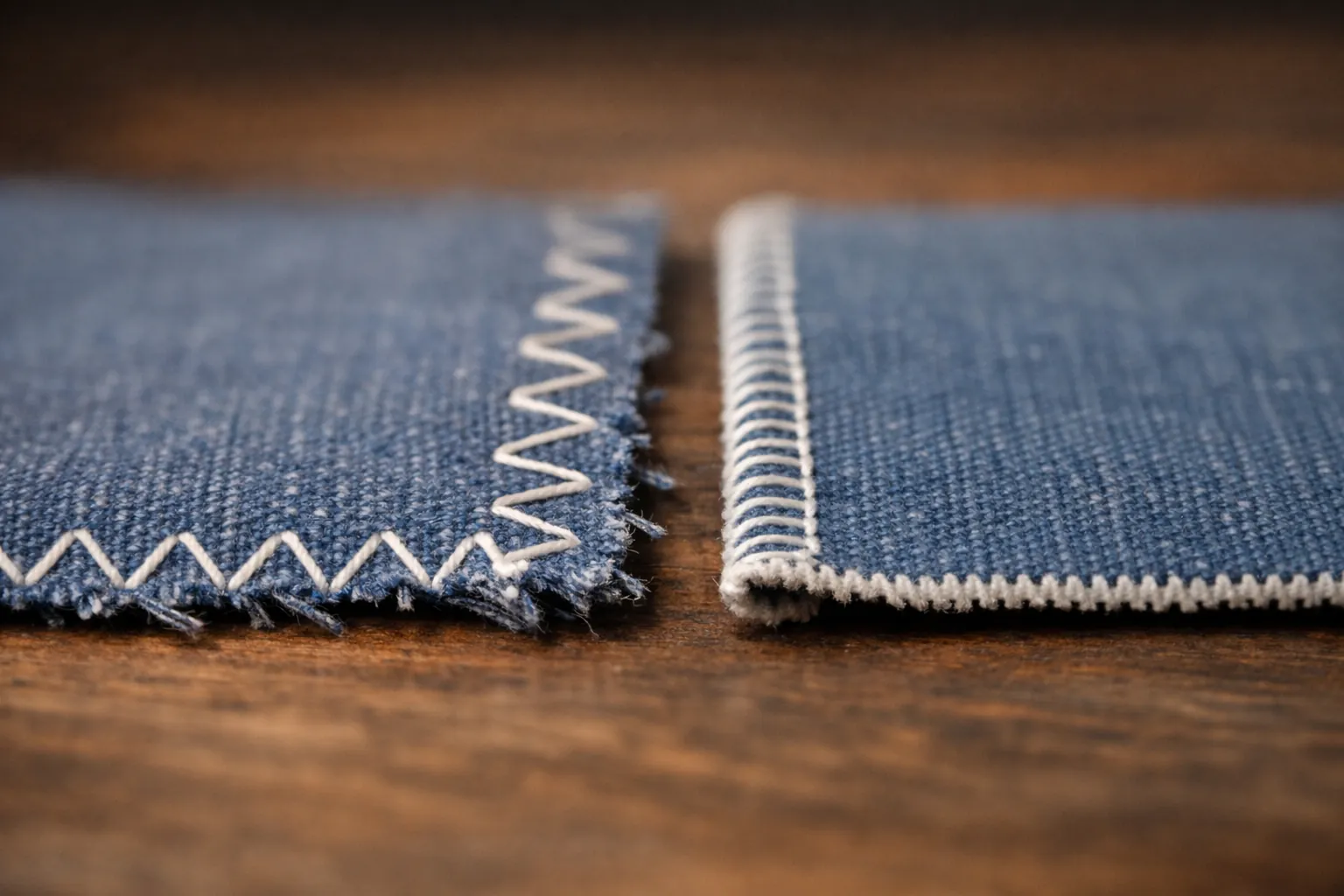
A lockstitch (sewing machine) links a top thread and a bobbin thread inside the fabric. It's strong, neat and can be sewn anywhere, which is why it's used for construction, topstitching and buttonholes.
An overlock stitch (serger) uses loopers to wrap thread around the fabric edge while one or two needle threads hold it, and a knife trims the edge just ahead. The looped structure stretches, which makes it ideal for knits.
Task by task: which machine does what
| Task | Sewing machine | Serger |
|---|---|---|
| Straight seams on woven fabric | Yes | Yes, trimmed and finished in one pass |
| Seams on stretchy knits | Yes, with a stretch or zigzag stitch | Yes, and this is where it shines |
| Finishing raw edges | Yes, zigzag or overcast (slower) | Yes, fast and professional |
| Buttonholes | Yes | No |
| Zippers | Yes | No (except a few edge techniques) |
| Topstitching, quilting, appliqué | Yes | No |
| Rolled hems on scarves and napkins | With a rolled hem foot (fiddly) | Yes, quick |
| T-shirt style twin-needle hems | With a twin needle | No (that's a coverstitch machine) |
| Gathering and ruffles | Yes, with long stitches | Yes, with differential feed or a gathering foot |
The pattern: a sewing machine can do every task, some more slowly. A serger does fewer tasks, faster and neater.
Do you need a serger?
| If you mostly sew... | Serger worth it? |
|---|---|
| Quilts | No. Quilt seams are enclosed. |
| Home decor, bags, mending | Rarely |
| Woven garments occasionally | Nice to have; zigzag works fine |
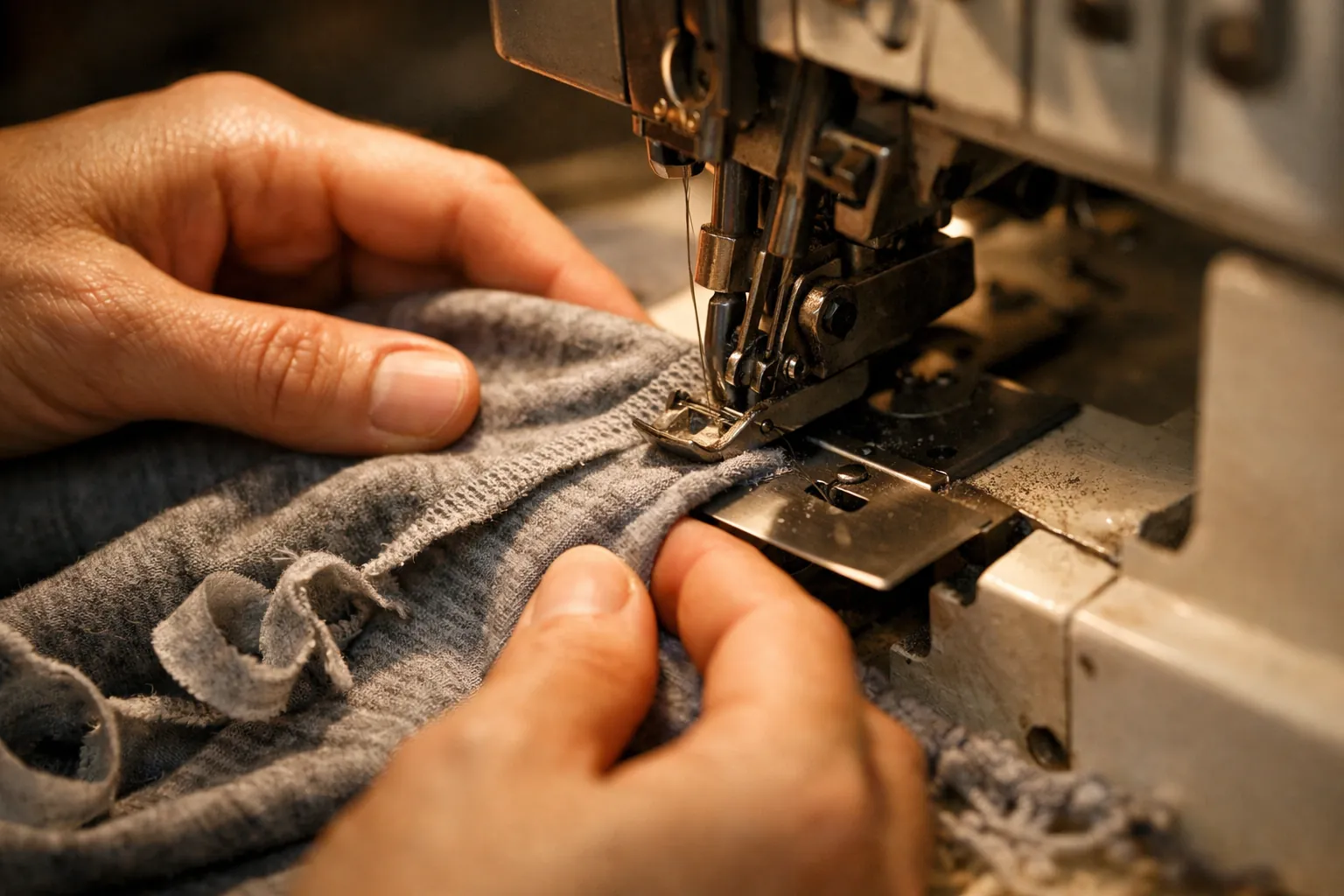
| Knit garments: T-shirts, leggings, activewear | Yes, a big upgrade |
| Lots of clothes, or selling what you make | Yes |
If you're still learning, put the money into a good sewing machine first. Our beginner sewing machine guide covers that. When your projects start to be knit garments, a serger is the upgrade you'll notice most.
Getting serger-like results without a serger
If you're not ready for a second machine, a sewing machine can finish seams well. These are the standard techniques, from quickest to neatest:
- Zigzag along the edge. Set a medium width and length and sew so the right swing of the needle just goes off the fabric edge. Quick and works on almost anything.
- Overcast stitch with an overcasting foot. Many machines have a dedicated overcast stitch, and some (like the Brother SE700, per its listing) include an overcasting foot that keeps the edge flat. It's the closest look to a serged edge.
- Pinking shears. For stable woven fabrics that won't be washed often, a zigzag cut slows fraying with no stitching at all.
- French seams. Sew wrong sides together, trim, then fold and sew right sides together to enclose the raw edge. Beautiful on sheer and lightweight wovens, and better than serging on fabrics where the inside shows.
- Stretch stitch for knits. A lightning-bolt or narrow zigzag stretch stitch, a ballpoint needle and a slightly longer stitch length will sew knits that don't pop when stretched.
What you give up is speed: every one of these takes an extra pass or extra trimming, where a serger sews, trims and finishes at once.
Serger vs coverstitch vs sewing machine
People often buy a serger expecting it to hem T-shirts. It won't. The two parallel rows of stitching on a T-shirt hem, with loops on the inside, are a coverstitch. Sergers finish edges and seam knits; coverstitch machines hem knits; sewing machines do everything else. Some higher-end machines combine serger and coverstitch, but they're more complex to switch between. For most home sewists the order is sewing machine, then serger, then (maybe) coverstitch.
If you're buying: the popular choices
On October 3, 2026, Amazon's best-selling machines in each category were:
- Sewing machine: the Brother XM2701, #1 in Sewing Machines (27 stitches, automatic needle threader, drop-in bobbin). For a computerized step up, the Brother CS5055 adds 60 stitches and seven one-step buttonholes.
- Serger: the Brother 1034D, #1 in Sergers & Overlock Machines (3 or 4 threads, color-coded threading, metal frame, 12,000+ ratings).
- 2-3-4 thread serger: the Singer HD0500S, which adds 2-thread stitches, a free arm and a lower looper LED.
Full picks are in best serger for beginners.
What a serger can't replace
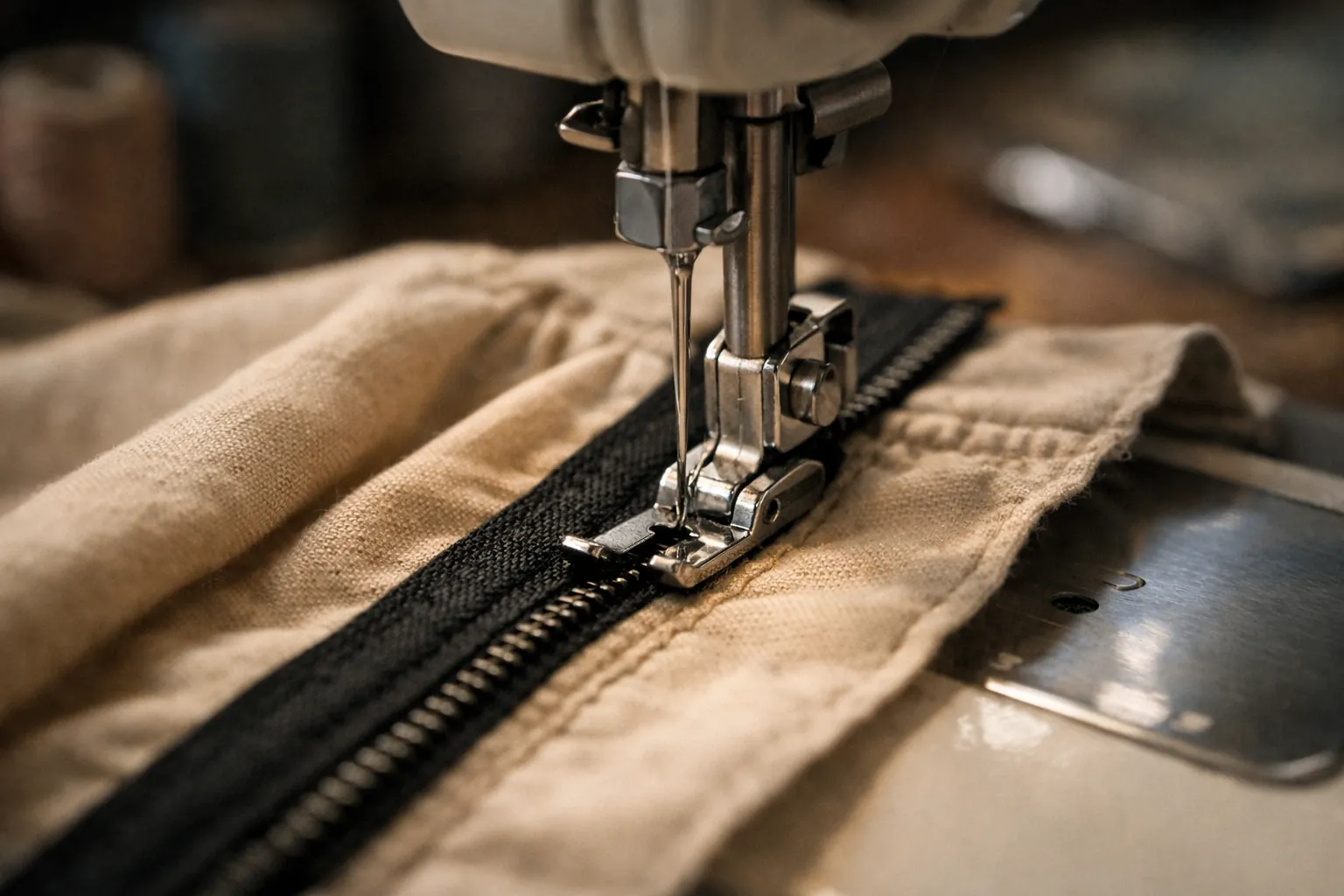
Even dedicated garment sewists switch back to the sewing machine for every zipper, buttonhole, waistband topstitch and hem that needs a clean single line. And the twin-row hem on a store-bought T-shirt isn't a serger stitch at all; it's a coverstitch, which needs either a separate coverstitch machine like the Brother 2340CV or a twin needle on your sewing machine.
Running costs
A serger uses three or four cones of thread at once, so it's worth buying thread on large cones. Neutral colors (white, black, gray, beige) blend with most fabrics because the serged edge is usually hidden inside the garment. See our serger thread guide. Blades wear out eventually; replacements for popular models are inexpensive.
The bottom line
Buy a sewing machine first: it does every job. Add a serger when you sew garments regularly, and especially knits, because it makes seams faster, stretchier and more professional. For most people, that's a pairing like the Brother CS5055 and the Brother 1034D.
Machine specs and ranks come from Amazon listings checked October 3, 2026. Prices change often, so the links above show the current price on Amazon. How we research · Affiliate disclosure